 Call us now:



Director removal in Thailand
The role of a director plays a crucial part in defining a company’s direction and ensuring its success. Although market changes and other influences constantly reshape the business environment, companies often follow these broader dynamics. In Thailand, the removal of a director constitutes a significant event that triggers changes within companies and across the market, thereby influencing overall market dynamics.
Table of Contents
What are the regulations concerning director removal in Thailand ?
The amended Thai Company Act sets out the regulations on director removal in Thailand. The Act explains how shareholders can take action against directors who breach their duties or engage in misconduct.
The key regulations on director removal include the following:
Grounds for Director Removal in Thailand:
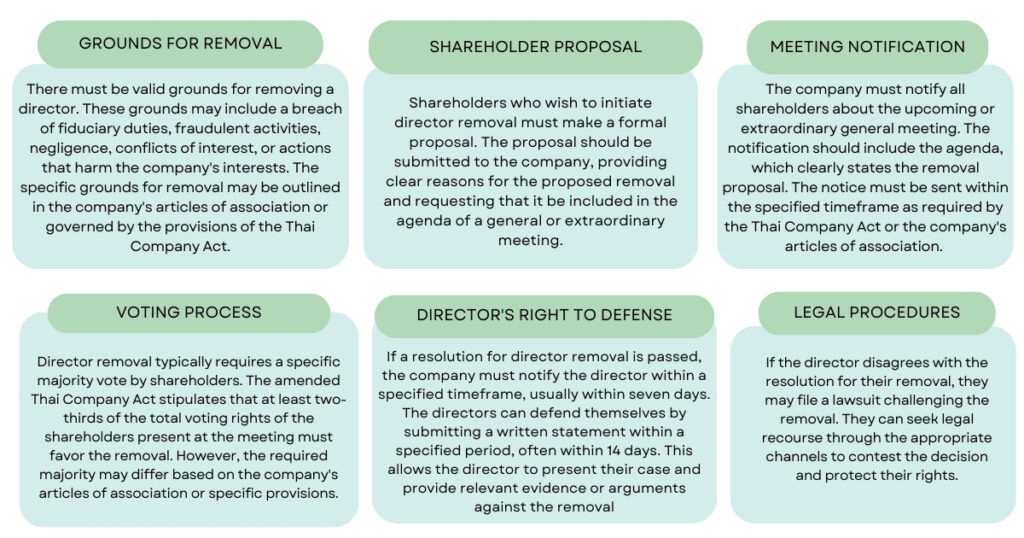
The Company Act sets out the circumstances in which shareholders may remove a director. These grounds usually include breaches of fiduciary duties, fraudulent conduct, neglect of responsibilities, conflicts of interest, or any activity that harms the company’s interests.
Shareholder Rights:
Shareholders may initiate the removal of a director through several mechanisms. They may propose the director’s removal at a general meeting. They may also request an extraordinary general meeting to consider the removal. In addition, shareholders may bring legal action against directors for wrongdoing.
Notification and Agenda:
Shareholders must notify the company of their intention to remove a director. They must include this matter in the meeting agenda and state the reasons for the proposed removal.
Voting Process:
To remove a director, shareholders must meet the required voting threshold. Under the amended Company Act, at least two-thirds of the total voting rights must support the removal, unless the company’s articles of association provide otherwise. If shareholders pass a resolution to remove a director, the company must notify the director within seven days. The director may submit a written explanation within 14 days of receiving the notice. If the director disagrees with the resolution, he or she may challenge it before a court.
Regulatory Oversight:
In Thailand, the Securities and Exchange Commission of Thailand and the Stock Exchange of Thailand oversee director removal in listed companies. These authorities monitor corporate governance compliance and respond to complaints concerning directors.
The specific context of director removal depends on the nature of the company. Therefore, shareholders and companies must rely on applicable laws and seek legal advice to ensure proper compliance throughout the removal process.
What law applies ?
The Thai Company Act governs the removal of directors in Thailand. This Act establishes the procedures, requirements, roles, and general rules for the formation, management, and operation of companies in Thailand. The legislature first enacted the Act in 1932, and lawmakers have amended it several times over the years, while keeping it in force.
The most recent amended version of the law applies, as each amendment revises or replaces earlier provisions. Accordingly, the current version of the Thai Company Act defines the procedure for director removal, sets out the legitimate grounds for removal, clarifies the role of shareholders, and regulates other related matters. The latest amendments appear in Company Act (No. 5) B.E. [year].
In addition, regulatory bodies issue related regulations, directors’ handbooks, and other guidelines that provide further details on procedures, relevant dates, responsible officers, and clear definitions for the parties involved. Both companies and shareholders should review the Thai Company Act carefully and consult a qualified lawyer to ensure proper compliance with the law.
Get expert legal guidance.
What are the requirements for director removal in Thailand ?
The requirements for director removal in Thailand may vary depending on the company’s structure and specific provisions in its articles of association. However, general requirements and steps need to be followed in the director removal process. Here are some common conditions :
Conclusion
The removal of a director in Thailand follows a legally structured process that protects corporate governance standards and shareholder rights. Directors play a central role in shaping a company’s strategy and management, but they remain accountable to shareholders and must comply with fiduciary duties, statutory obligations, and corporate governance principles.
Under the Thai Company Act (as amended), shareholders may remove directors who engage in misconduct, breach their duties, or act against the company’s interests. The law sets out clear procedural safeguards, including requirements for proper notification, inclusion of the matter in the meeting agenda, specified voting thresholds, and the director’s right to respond or challenge the resolution before a court.
For listed companies, the Securities and Exchange Commission of Thailand and the Stock Exchange of Thailand provide additional regulatory supervision, which strengthens transparency and ensures compliance.
If you need further information, you may schedule an appointment with one of our lawyers.
The removal of directors is governed primarily by the Thai Company Act, as amended. This law sets out the grounds, procedures, and voting requirements for removing directors.
Directors may be removed for breaches of fiduciary duties, fraud, conflicts of interest, neglect of responsibilities, or actions that harm the company’s interests. The company’s articles of association may also provide additional provisions.
Shareholders have the authority to remove a director. They may propose removal at a general meeting or request an extraordinary general meeting to vote on the matter.
Generally, at least two-thirds of the total voting rights must support the removal, unless the company’s articles of association specify a different threshold.
Yes. After receiving notice of the resolution, the director may submit a written explanation within the prescribed period and may challenge the resolution before a competent court if they believe it is unlawful.